
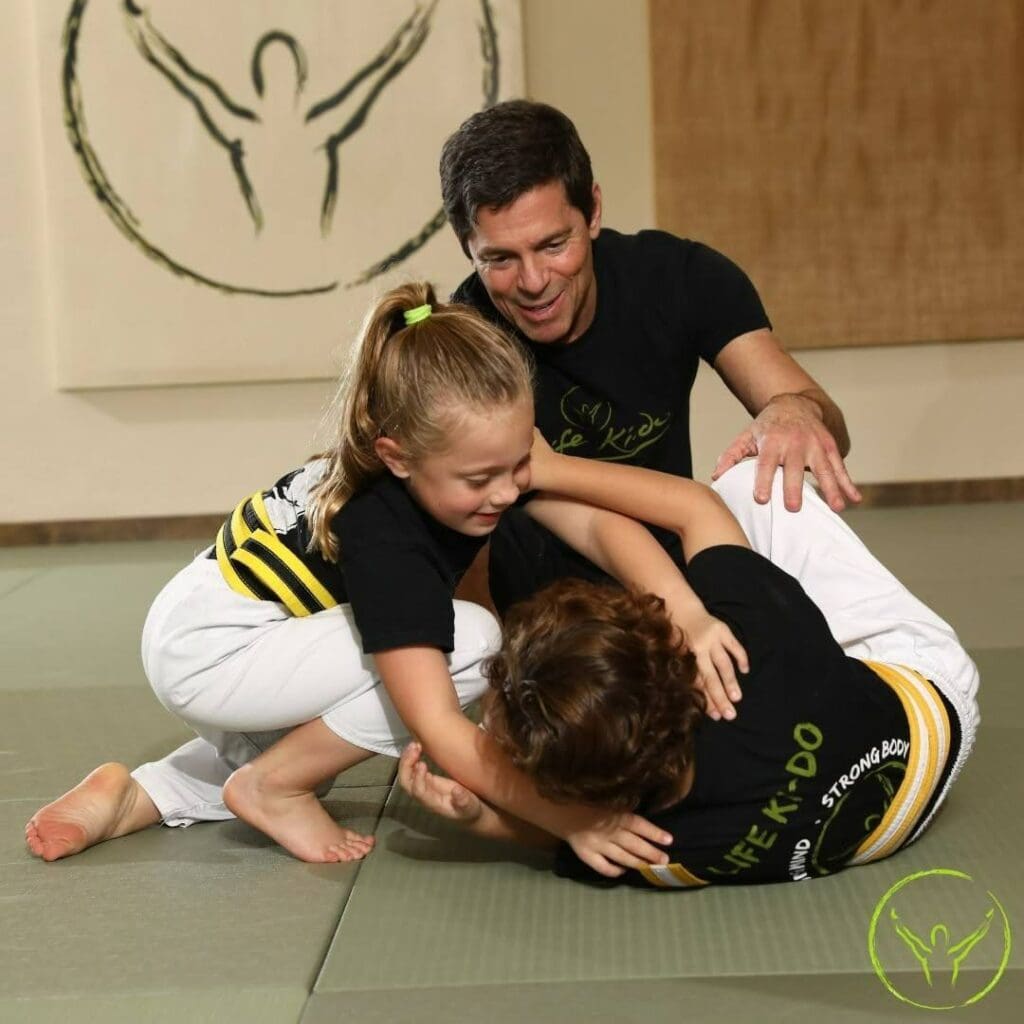
Many physical confrontations can move to the ground, which is one reason ground fighting in Brazilian Jiu Jitsu is such an important skill for martial artists to understand.
BJJ teaches you what to do in that situation, and it does so with a level of detail that many striking-focused arts do not emphasize.
We find that many beginners are surprised by how much control a smaller person can have over a larger opponent on the ground. That is one of the central ideas explained in this Brazilian Jiu Jitsu guide.
Through grappling, submissions, guard passes, and body awareness built during live sparring sessions, BJJ gives you practical tools for managing physical resistance.
You learn to work from the clinch, control positions, and apply technique instead of relying entirely on raw strength.
A 150-pound person may be able to control or submit a 220-pound training partner when leverage, timing, and positioning are used correctly. That experience can be both humbling and satisfying because it shows how much effective movement matters.
Understanding why BJJ focuses on ground fighting also helps explain how the art can develop self-defense skills, confidence, and overall growth as a martial artist.
Benefits of Ground Fighting in Brazilian Jiu Jitsu for Practical Skill Development
The ground techniques are developed in far greater detail than ground techniques in many other martial arts.
Those arts may concentrate heavily on striking, distance, or takedowns. BJJ focuses extensively on what happens after we hit the mat.
In BJJ, we do not rely on striking once we are on the ground. Instead, we use grappling and positional control to manage our opponent.
This focus is one reason Brazilian Jiu Jitsu has developed into such a detailed system for learning how to move, defend, and stay composed during close physical contact.
- Submissions replace striking as a primary way to finish an exchange.
- Positional hierarchy guides ground fighting decisions.
- Effective ground work rewards patience, timing, and strategy.
- Transitions between positions create offensive and defensive opportunities.
Other martial arts such as karate or boxing generally train us to function most effectively while standing. BJJ prepares us for the clinch, the takedown, and everything that follows. That is a major reason many martial artists include grappling in their broader training.
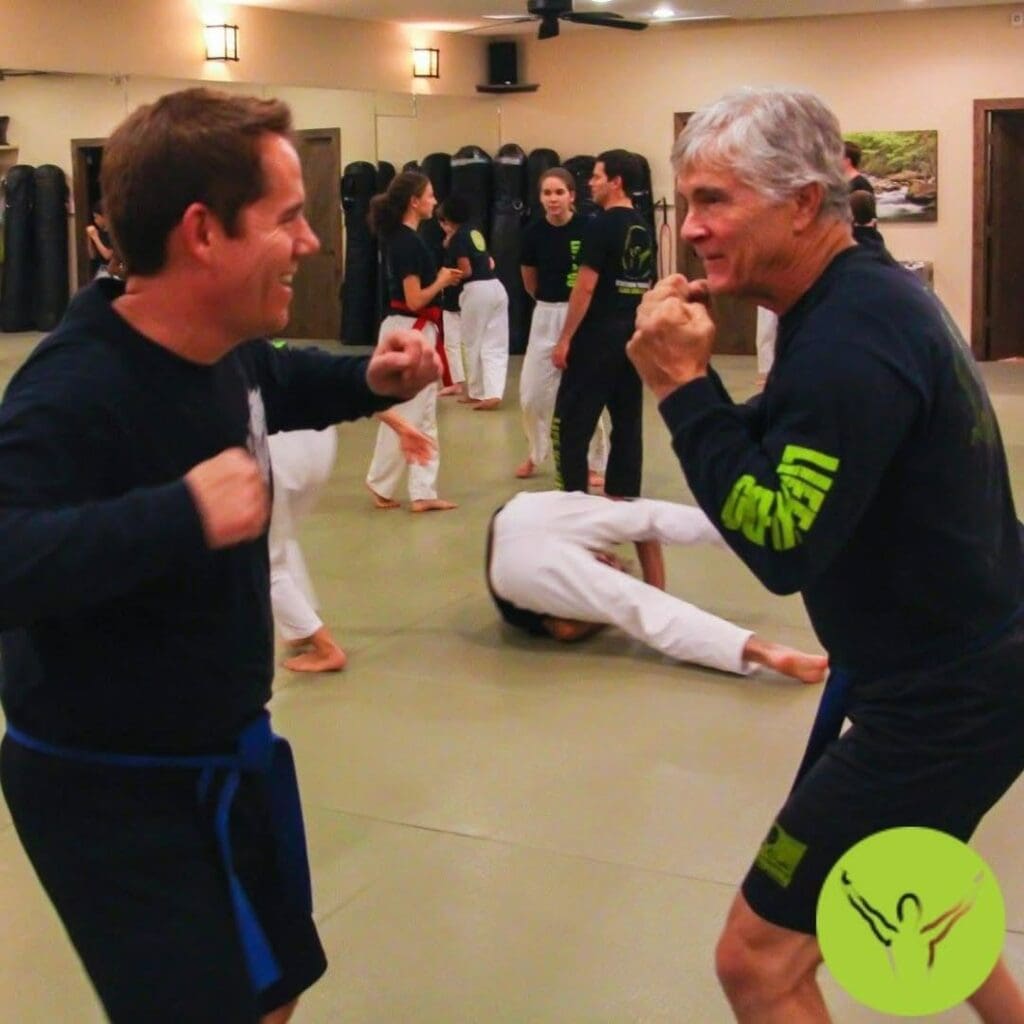
Why BJJ Focuses on Ground Fighting
Training on the ground develops practical fighting skills through direct experience. We are not simply learning movements in theory. We apply them against training partners who provide controlled resistance, allowing us to understand which techniques continue working when someone pushes back.
BJJ ground fighting also teaches us how to stay calm under pressure. When someone is controlling us from the top and we feel their weight or strength, we have to continue thinking clearly rather than reacting impulsively. That ability to remain composed can become valuable well beyond martial arts training.
Benefits of Ground Fighting in BJJ
Ground training challenges both the body and mind.
Every session requires us to move, control, adjust, and react.
Because grappling involves resistance from another person, strength, conditioning, coordination, and body awareness develop together.
- Ground training builds functional strength through live resistance.
- Ground training improves problem-solving under physical pressure.
- Ground training develops body awareness and more efficient movement.
- Ground training strengthens confidence through consistent sparring experience.
Body awareness on the ground develops gradually. We learn where our limbs are, how to create space, when to shift our weight, and how to move without wasting energy. These skills matter during live sparring and contribute to a more adaptable approach to self-defense.
BJJ ground control for beginners
New students usually begin by learning basic ground-control positions. These positions form the core of Brazilian Jiu Jitsu ground work. Before we focus heavily on submissions, we need to understand where to be and why.
Position before submission is one of the most useful principles beginners can learn.
Four core positions include:
- Mount: controlling an opponent while positioned above their torso.
- Side control: pinning and managing an opponent from the side.
- Guard: controlling distance and movement from your back using your legs.
- Back control: controlling an opponent from behind while limiting their ability to turn toward you.
Each position creates different choices. From mount, we may maintain control or begin setting up a submission.
From guard, we use our legs, hips, and grips to manage distance, sweep, or attack.
BJJ ground control for beginners depends on more than strength. It is about angles, leverage, balance, and intelligent use of body weight. That is why smaller practitioners can often control larger training partners once their positioning improves.
BJJ Ground Fighting Fundamentals
Fundamentals create the base for advanced techniques. We cannot skip ahead and expect complicated movements to work consistently without first developing reliable positioning and movement habits.
Understanding the typical Brazilian Jiu Jitsu training structure also helps beginners see how drilling, technical instruction, positional practice, and live rolling work together to build those fundamentals over time.
- Consistent drilling reinforces efficient movement patterns.
- Live rolling exposes gaps in our ground game.
- BJJ ground fighting fundamentals remain useful across every skill level.
- Small technical improvements can add up to significant progress over time.
Takedowns and guard passes are connected to the ground game as well. We use takedowns to move an exchange toward the mat, then use passing and positional control to improve our situation and potentially create submission opportunities.
The more we roll, the more clearly we understand where our game breaks down. Those moments are valuable because they show us exactly what needs attention. With experience, we learn to find more calm in the uncertainty of a live grappling exchange.
Over time, the ground game becomes a connected system.
We learn to connect control, attacks, escapes, defense, and transitions instead of treating each technique as an isolated move.
Continuing Your Ground Fighting in Brazilian Jiu Jitsu Development
BJJ ground training develops practical skills that can improve body awareness, confidence, composure, and self-defense ability.
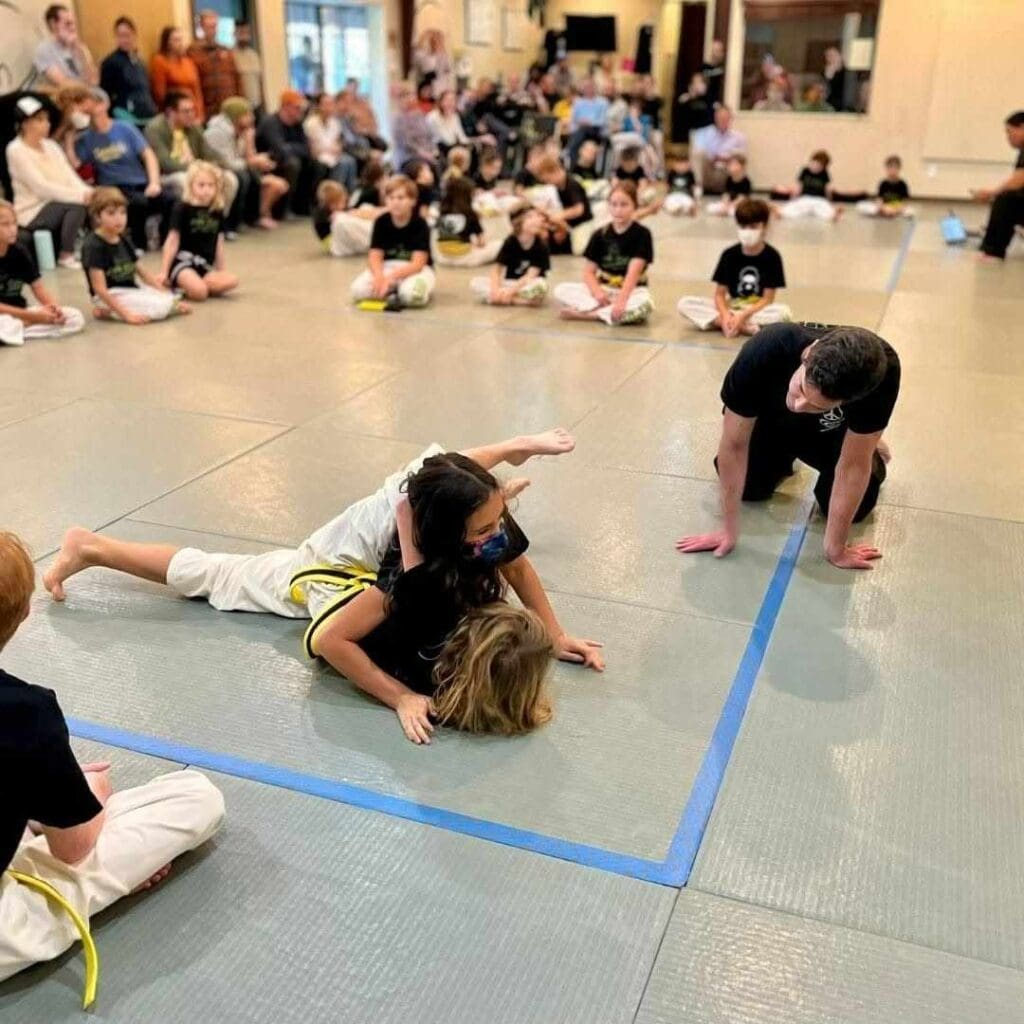
Students learn how to control positions, escape pressure, apply submissions responsibly, and make decisions while another person is actively resisting.
Fundamental movement, positional training, controlled resistance, and live practice are core components of our Brazilian Jiu Jitsu classes in Austin, showing how students build technique, positional awareness, and practical skill through structured progression.
You do not need prior experience to begin understanding ground fighting in Brazilian Jiu Jitsu. Progress starts with learning basic positions, practicing efficient movement, and becoming comfortable with gradual resistance.
As those skills develop, techniques that once felt confusing begin to connect.
That is ultimately what makes ground fighting in Brazilian Jiu Jitsu such an important part of BJJ. It teaches us not only what to do when an exchange reaches the ground, but also how to stay aware, solve problems, and continue working under pressure.


