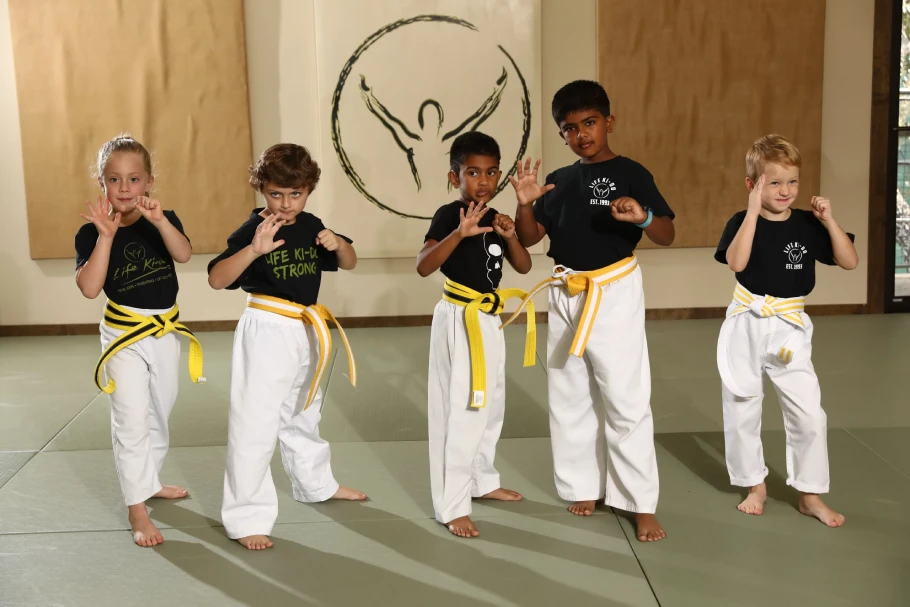

“Is martial arts safe?” Parents ask this question more than almost any other before enrolling a child. Adults ask it too, especially if they have never trained before or are returning to physical activity after a long break.
🗲 SHORT ANSWER
Martial arts can be practiced safely by children and adults, but it is not risk-free. Safety depends on how instructors teach, how gradually students progress, how aware everyone on the mat is, and the culture of the school.
That answer may feel less satisfying than a simple yes or no. However, it is far more useful. Martial arts training involves real physical contact, so some possibility of injury comes with the territory. At the same time, the level and type of risk can look very different from one training room to the next.
In fact, two schools can teach the same martial art and create completely different experiences. One builds skills patiently and expects partners to look after each other. Another pushes students to prove themselves from the first day.
In other words, the style itself is only part of the safety question. Below, we look at what actually shapes martial arts safety, and what to look for when you visit a school for yourself or your child.
Is Martial Arts Dangerous?
🗲 THE TRUTH
Martial arts is not inherently dangerous, but it is a physical activity with real risk. Every style can be practiced in a safer or less safe way. For this reason, how people teach and train matters as much as what they practice.
Setting weapons aside, most martial arts draw on a handful of physical activities:
- Striking, such as punching and kicking
- Blocking and defensive movement
- Takedowns
- Wrestling
- Grappling, including arts such as Brazilian Jiu-Jitsu (BJJ)
Each of these asks something different of the body. Striking involves impact. Takedowns involve losing and regaining balance. Meanwhile, wrestling and grappling involve close contact, leverage, and pressure on joints.
Is Striking More Risky Than Grappling?
Not automatically. Many people assume striking must be the riskiest part of martial arts, since getting punched or kicked sounds more hazardous than rolling around on a mat.
Striking can carry risk. Yet injuries also happen in wrestling and grappling, often through joint strain. When two people twist, hold, and apply leverage, it is easy to push a joint past where it wants to go.
A more accurate view is that neither striking nor grappling is automatically safe or unsafe. Striking safety and grappling safety both come down to the same thing: whether people practice carefully or carelessly.
Ultimately, the activity itself is only part of the safety question. How an instructor teaches it, and how students practice it, matter just as much.
Watch: Is Martial Arts Safe for Kids and Adults? Martial Arts Can Be Dangerous—Unless You Know What to Look For
In the video below, Life Ki-do founder Jonathan Hewitt answers the question parents ask him most often: is martial arts safe for my child, or for me?
After roughly 40 years of training, he shares a candid story about injuring his knee while practicing Tai Chi on his own. Tai Chi is one of the gentlest arts he teaches, and he rarely sees anyone get hurt in it. His injury came from doing a movement incorrectly, before he had the understanding to recognize that something felt wrong.
Rather than a warning about Tai Chi, the story is a reminder. Even a gentle art can cause harm when technique, awareness, and guidance are missing.
🗲 KEY TAKEAWAY
Martial arts safety is not only about which martial art you choose. It is also about awareness, instruction, training partners, progression, and the culture of the training environment.
The Training Environment Matters More Than You Might Think
Every martial arts school has a culture. You can usually feel it within a few minutes of watching a class.
That culture shapes how students treat each other, how hard they push, and whether they feel able to speak up. As a result, it may matter more for safety than the style printed on the sign. For many families, the most honest answer to “is martial arts safe?” starts right here.
Signs of a Safe Martial Arts Training Environment
When you visit a school, watch for these signs:
- Students are respectful toward one another, including toward beginners
- Partners talk to each other during drills and partner work
- Instructors actively watch what students are doing, rather than simply running the clock
- Nobody pressures students into challenges they are not ready for
- Partners cooperate instead of constantly trying to overpower each other
- Instructors encourage students to check in: is this the right level of challenge, or do you want more or less?
- Beginners have room to learn without feeling embarrassed or singled out
- Physical contact stays controlled and has a clear purpose
When the Culture Is About Proving Yourself
Now picture a different room. Here, instructors consistently encourage students to dominate their partners, prove themselves, or push through discomfort without saying anything.
In that kind of environment, people tend to make rushed decisions. They are also less likely to notice when a partner is struggling. Nobody sets out to cause an injury, but the conditions make one more likely.
What About Competitive Gyms?
Competitive does not mean bad. Some people actively want a high-intensity, competitive environment, and it can be a great fit for them.
Still, it is fair to recognize that a highly competitive culture may carry different considerations around risk. Some very skilled, very aware competitors train hard and rarely get hurt. The real question is whether that environment matches what you, or your child, are looking for right now.
Awareness Is One of the Biggest Parts of Martial Arts Safety
Why does awareness matter so much? Because it runs through almost every other safety factor. Specifically, it shows up on three levels: yours, your partner’s, and your instructor’s.
Your Own Awareness
Safe martial arts training starts with paying attention to yourself. In practice, that means:
- Knowing your limits, and respecting them
- Noticing how your body feels in each movement
- Recognizing when you are distracted, tense, frustrated, or emotionally heightened
- Understanding when you need to slow down or ask a question
If something does not feel right, that feeling is worth listening to.
Your Partner's Awareness
Most martial arts training happens with other people, so your safety also depends on your training partner. A good partner:
- Respects your limits as well as their own
- Controls their movements, especially at speed or under pressure
- Communicates before and during a drill
- Notices when you are uncomfortable or not ready, and adjusts
Partner safety works both ways. In fact, learning to be a good training partner is one of the most important skills any student develops.
Your Instructor's Awareness
From the front of the mat, the instructor sees the whole room. A skilled instructor:
- Observes students closely, not just the ones in front
- Adjusts the challenge for each person’s experience and readiness
- Teaches techniques in an appropriate order
- Steps in when something looks unsafe
How Emotions Affect Awareness
Emotional state matters more than many people expect. When someone becomes overly competitive, fearful, frustrated, or focused on proving themselves, their awareness tends to narrow.
In that state, it is easier to hurt yourself or someone else, simply because you are not fully paying attention to what you are doing. Many everyday injuries follow the same pattern. Someone is distracted, rushed, or not paying attention, and they trip or misstep.
By contrast, a calm, focused student is usually a more aware student.
Why Do Martial Arts Students Learn to Fall and Roll?
Here is an interesting paradox. In everyday life, falling is one of the most ordinary ways people get hurt. Yet martial arts deliberately practices falling and rolling, over and over.
Why practice the very thing that causes injuries?
Because most people never learn how to fall. When they lose their balance unexpectedly, they meet that experience for the first time, usually with no plan and no practiced response.
On the mat, by comparison, students rehearse how to respond to a loss of balance in a controlled setting. They learn to tuck, roll, and spread out the force of landing. With good instruction, falling becomes a skill rather than a surprise.
Practice Does Not Make You Immune
There is an important distinction here, however. Practicing falls and rolls does not make anyone immune to injury.
Anyone can still fall or roll incorrectly, or without awareness, and get hurt. For that reason, good instructors teach these skills progressively, starting slowly and low to the ground, and students practice them with attention.
Falling and rolling show something martial arts does well. It teaches people to interact with physical risk deliberately, instead of simply hoping to avoid it.
Start With Lower-Risk Skills Before Higher-Risk Techniques
Gradual progression is one of the clearest signs of safe martial arts training. For example, beginners should not necessarily start by immediately practicing:
- Hard striking or taking hits to the head
- Chokes
- Arm bars and other joint locks
- High-intensity grappling
- Other techniques that require a high level of control and awareness
What Should Beginners Learn Before Sparring?
A thoughtful curriculum builds a foundation first. For martial arts beginners, that foundation often includes:
- Falling
- Rolling
- Controlled movement
- Safe partner positioning
- Basic escapes
- Controlled holds, such as safely holding someone down in wrestling or Brazilian Jiu-Jitsu
- Communication with partners
- Awareness of self and others
These skills carry lower risk. In addition, they create the base that more advanced training depends on.
Progression Is Not Avoidance
Gradual progression does not mean avoiding challenging training forever. Many students eventually want to spar, grapple at higher intensity, or work on advanced techniques.
Instead, the goal is to build enough awareness, control, and technical understanding to approach those skills responsibly. Once a student is ready, higher-risk techniques become far more manageable.
What Should I Look for in a Martial Arts School?
🗲 SHORT ANSWER
Look for a safe martial arts school where instructors actively supervise, foundational skills come before advanced techniques, partners cooperate and communicate, and students feel able to say when something is too much.
The best way to judge a school is to visit, watch a class, and talk with the instructors. As you do, keep a few practical questions in mind.
How to Choose a Safe Martial Arts School: Questions to Ask
- Do instructors pay attention to beginners, or mostly to advanced students?
- Do students communicate with their partners during drills?
- Are students encouraged to work together, or to constantly prove themselves?
- Does the instructor adjust challenges based on each student’s experience and readiness?
- Do beginners learn foundational skills like falling, rolling, and escapes before more advanced techniques?
- Does the environment feel respectful and supportive?
- Can students say when something feels like too much, and does anyone listen?
- How does the school respond when someone makes a mistake?
- Do children receive different progression and supervision than experienced adult students?
Twenty minutes of watching a class will tell you more than any brochure.
Is Martial Arts Safe for Kids?
🗲 SHORT ANSWER
Martial arts can be a safe activity for kids when training includes close supervision, age-appropriate progression, controlled contact, and a respectful, cooperative culture.
Children benefit most from programs that build foundations like falling, rolling, and body control before introducing more complex techniques. Good martial arts safety for children also means instructors adjust intensity for each age group rather than treating young students like experienced adults.
Is Martial Arts Safe for Adults?
🗲 SHORT ANSWER
Martial arts can be a safe activity for adults who start gradually and train somewhere that respects individual limits.
Adults often bring more ego, more old injuries, or more pressure to keep up. For this reason, a good school gives adult beginners room to learn at their own pace and encourages open communication about what feels right.
Martial Arts Safety Is About How You Train
Asking “is martial arts safe?” is a good starting point. On its own, though, it is not quite enough. A more useful question is:
How is this martial art being taught and practiced?
The answer comes down to a handful of factors that work together:
- Awareness:of yourself, your partner, and the room
- Instruction:attentive teachers who adjust to each student
- Progression:lower-risk foundations before higher-risk techniques
- Training partners:people who control their movements and care about yours
- Communication:an environment where checking in is normal
- Environment and culture:a room built around growth rather than proving yourself
Like any physical activity, martial arts involves some inherent risk. The goal is not to pretend that risk does not exist. Rather, it is to create a place where people learn to meet physical challenges progressively and responsibly.
Choosing the Right Environment
So, is martial arts safe? It can be, when the environment supports it. You do not need to eliminate every physical challenge to train safely. After all, challenge is part of how people grow, on the mat and off it.
What you need is a way of approaching those challenges: with awareness, appropriate progression, good instruction, and respect for the people you train with.
If you are considering martial arts for yourself or your child, take your time. Visit a few schools and watch a full class. Ask the instructors how they introduce new students and how they handle partner work. Above all, pay attention to how people treat each other when they think nobody is watching.
If you are starting that search in the Austin area, our guide to martial arts in Westlake, TX explains how Life Ki-do approaches training, progression, and personal development for kids, teens, and adults.
Ultimately, the right environment will feel respectful, supportive, and focused on helping every student grow.
🗲 JOIN US TODAY!
For families in Austin, Life Ki-do offers a free introductory class for new students of every age and experience level. No prior experience is required, and no commitment is expected. Come and experience the difference that a genuinely nurturing and empowering training environment makes.
Frequently Asked Questions
Can you get injured doing martial arts?
Yes. Like any physical activity, martial arts carries some risk of injury. However, the likelihood and type of injury depend heavily on how training is taught, how gradually students progress, and how carefully partners work together.
Is Brazilian Jiu-Jitsu safe?
Brazilian Jiu-Jitsu can be practiced safely, but like other grappling arts it involves joint pressure and close contact. BJJ safety depends on controlled technique, gradual progression, attentive instruction, and partners who respect each other’s limits.
Does martial arts training have to involve hard contact?
No. Many schools build skills through controlled drills, cooperative partner work, falling, rolling, and escapes long before students try harder contact. Training intensity can increase gradually as awareness and control develop.
Is martial arts safe for beginners?
Martial arts can be safe for beginners when training starts with the right foundations. Beginners can train safely by starting with foundational skills, communicating openly with partners, and choosing a school where instructors supervise closely. Just as important, they should feel comfortable saying when a challenge feels like too much.
What makes a martial arts school safe?
A safe martial arts school combines attentive instructors, gradual progression, controlled partner work, and a respectful culture. In a safe school, students help each other grow rather than trying to prove themselves.
About Jonathan Hewitt
Jonathan Hewitt is the founder of Life Ki-do Martial Arts & Personal Development and an award-winning author of multiple books on parenting, confidence, and emotional development. For over 30 years, he has helped children, teens, and families build calm strength, confidence, and real-life skills from the inside out. Jonathan is also the host of the Spiritual Ninja Podcast on all platforms.

Why Do I Keep Checking My Phone? What Your Body Has to Do With It
Why do you keep reaching for your phone, even when you do not need it? Explore what you may really be looking for, why fighting the urge rarely works, and how breathing, movement, time outside, and real connection can help you build a healthier relationship with your phone.
Is Martial Arts Safe? What Parents and Adults Should Look for in a School
Is martial arts safe? The honest answer depends on how people teach and train. Learn how awareness, progression, training partners, and school culture shape martial arts safety, plus a practical checklist for visiting a school for yourself or your child.
Why You’re Bad at Things Before You Get Good at Them: How to Learn Without Giving Up
Being bad at something new is not evidence that you should quit. It is evidence that you are at the stage where competence gets built — which means you are exactly where you need to be. This comprehensive guide explores why the pressure to be good immediately actually interferes with learning, what really happens during skill development, and three practical Life Ki-do frameworks — the Three B’s, River Flow, and the A-B Formula — for moving through the beginner stage with more openness, less frustration, and a healthier relationship with the learning process itself.

Healthy Relationships Start With You: How to Build Better Connections
Most people approach relationship problems by asking what the other person needs to do differently. This article takes a different starting point. Understanding how you show up — your fears, assumptions, reactivity, and needs — is the foundation from which genuine connection becomes possible. This guide explores what makes relationships healthy, why your inner world shapes your outer connections, the Life Ki-do My Shoes, Your Shoes, Our Shoes framework, empathy without losing yourself, and how martial arts develops real relationship skills through consistent partner practice.
Ground Fighting in Brazilian Jiu Jitsu: Why It Is Essential
Many physical confrontations can move to the ground, which is one reason ground fighting in Brazilian Jiu Jitsu is such an important skill for martial
Understanding Tai Chi Breathing Techniques for Relaxation and Focus
“The breath is the bridge which connects life to consciousness.” Thich Nhat Hanh wrote those words, and they speak directly to what Tai Chi has
