
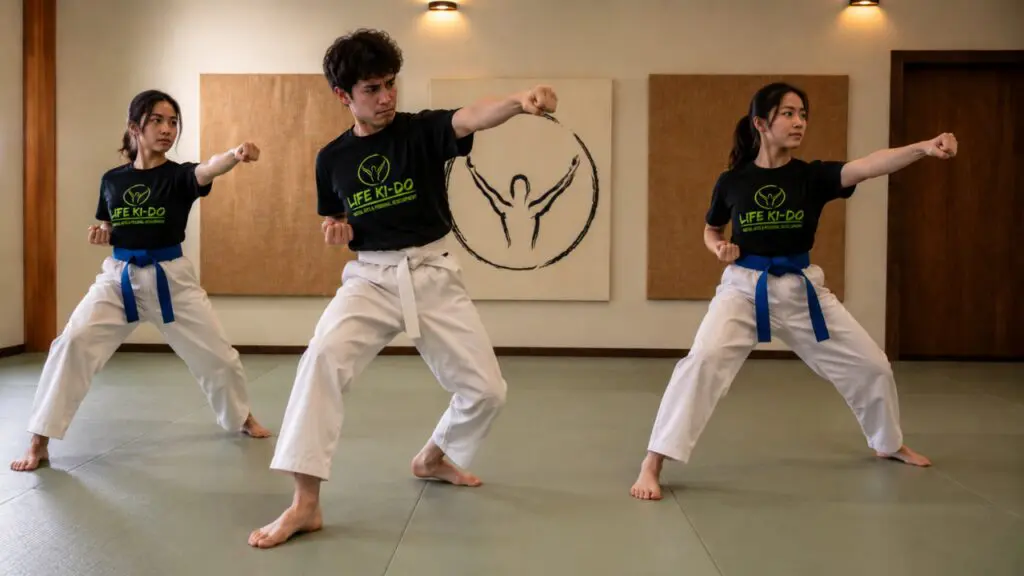
At some point, almost everyone has started something new and been confronted by the same uncomfortable truth: you are not good at it yet. The musical instrument sounds awkward, the language feels impossibly strange in your mouth, and the sport or movement practice that looked fluid when someone else did it is clumsy and uncertain when you attempt it.
The experience of being bad at things before you get good at them is one of the most universal and necessary stages in human development. It is not a mystery or a personal failing. It is a description of how skill development actually works.
The difficulty is that we live in a cultural moment that does not much honor the beginner stage. Speed is valued. Expertise is celebrated. The message that arrives from social media and popular productivity culture is that there is always a faster path, a hack, a shortcut to competence. If you are still struggling after a reasonable amount of time, something must be wrong.
This article offers a different perspective. Struggling is not evidence that you lack ability or should quit. It is evidence that you are at the stage where the skill has not yet been built. Understanding that distinction, and developing the tools to move through the early stages of learning without being derailed by frustration, comparison, or perfectionism, may turn out to be one of the most valuable things you develop.
Why Is It So Hard to Be a Beginner?
Being a beginner is uncomfortable for reasons that run deeper than simply not knowing what to do yet. The discomfort tends to come from the gap between where you are and where you expect to be, and that gap is often shaped by social comparison, perfectionism, and cultural expectations about how quickly competence should develop.

The Hack Culture Problem
Contemporary learning culture has developed a strong bias toward speed. Online content is full of promises: how to learn a language in three months, how to master a skill over a weekend, how to get good fast. While some of this reflects genuine insight about efficient practice, a great deal of it creates a distorted picture of what the early stages of real skill development actually look and feel like.
When learners expect rapid competence and encounter instead the normal, slow, sometimes frustrating reality of being a beginner, they often interpret the gap as a personal failure. The hack culture message implies that if you are still struggling, you have not found the right method, or perhaps you are simply not cut out for this particular skill. Neither conclusion is usually accurate.
The real cost of this pressure is not just discouragement. Urgency about learning creates physical, mental, and emotional tension that actually interferes with the process. A person who is tense, self-critical, and anxious about their progress is not in the best state for the kind of open, exploratory, attentive practice that skill development requires. In trying to skip the beginner stage, they often make it harder to move through it.
Comparison and Social Media
Social media has added a particular dimension to this difficulty. What people share online is almost always a curated version of their capabilities: the moments when the technique worked, the performance after years of practice, the confident execution of something that took months or years to build. The confused, awkward, error-prone sessions from the beginning rarely make it into the feed.
A beginner comparing their first weeks of practice to someone else’s polished output is not making a useful comparison. They are comparing their beginning to someone else’s middle or end. Progress measured against your own previous position is meaningful. Progress measured against someone else’s very different position is usually just discouraging.
Why You’re Bad at Things Before You Get Good at Them
Being bad at a new skill is a normal and expected stage of skill development. Competence has not yet been built. The neural pathways, the physical patterns, and the mental models that will eventually allow you to perform a skill with ease do not exist yet. They develop through practice, through feedback, through repetition, and through the gradual accumulation of experience that turns deliberate, effortful performance into increasingly natural capability.
In the video below, Jonathan, the founder of Life Ki-do, explores why struggling at the beginning of something new is not evidence of inadequacy. He explains what the early stage of learning actually involves and how the practical frameworks Life Ki-do uses can help people move through it more effectively, without the unnecessary extra layer of judgment, comparison, and tension that so often makes the beginner stage harder than it needs to be.
The central insight the video communicates is worth holding clearly: the question when starting something new is not why am I bad at this yet. The more useful question is what does the path from here to there actually look like, and how do I move along it without creating extra obstacles through my own resistance or impatience?
Every skill, regardless of the domain, has stages of development. People who became excellent at something moved through a stage of not being good at it. That early stage is not a problem to be eliminated. It is the terrain through which skill development happens. The goal is not to avoid it but to move through it with as much openness, curiosity, and practical support as possible.
🗲 THE CENTRAL REFRAME
Being bad at something new is not evidence that you should quit. It is evidence that you are at the stage where the skill has not yet been built. Competence develops through practice, not before it.
What Actually Happens When You Learn a New Skill?
Skill development is not a linear progression from ignorance to competence. It tends to be more irregular than that, with periods of apparent stagnation, occasional sudden improvements, and setbacks that can feel discouraging before revealing themselves as part of the process. Understanding what is actually happening when you practice a new skill can make the difficult periods more navigable.
The Importance of Breaking Skills Into Smaller Steps
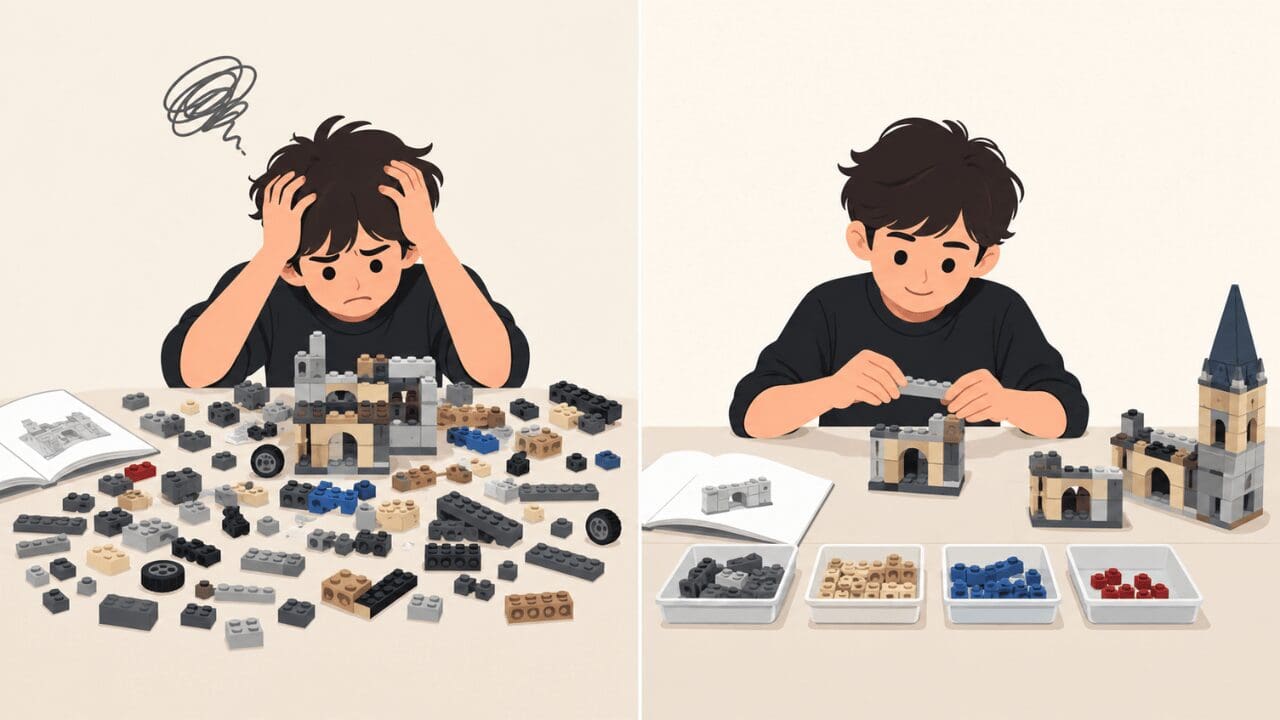
Almost every complex skill is composed of smaller components that need to be developed individually before they can be integrated into the larger whole. A beginner who tries to execute the full skill from the start is attempting to manage multiple undeveloped components simultaneously, which is one of the reasons the experience feels so difficult and why errors tend to appear in many places at once.
Breaking a skill into its component pieces and working on each piece with appropriate focus and repetition is one of the most effective approaches to skill development. Rather than practicing the full, complex skill in a way that produces frustration and confusion, a learner can focus on the smallest next piece that is slightly beyond their current ability. This makes practice achievable and produces the specific kind of success that builds toward the larger skill.
The question worth asking when you feel stuck is therefore not why can’t I do this. A more useful question is: what is the smallest component of this that I could practice right now? That reorientation often reveals a manageable step where previously there seemed to be only an overwhelming whole.
The Role of a Clear Learning Path
One of the most practically significant differences between productive and unproductive early learning is whether the learner has a clear path. Not a rigid formula, but a general sense of the steps involved in developing the skill, what the intermediate stages look like, and what direction to move in when you feel stuck.
This is one of the genuine values of learning from someone who has already developed competence in the skill. An experienced teacher can often identify a path through the early stages that would take a self-taught learner much longer to find independently. A good instructor can also adjust the path to what is actually happening for a specific learner, rather than applying a generic approach to someone whose difficulty is specific.
Having a clear path does not mean there will be no difficulty or frustration. It means the difficulty and frustration have context. You know that where you are now is a stage, not a verdict, and you have some sense of where the next stage begins.
If you’re looking to build a stronger relationship with yourself while developing the skills that support growth, explore Life Ki-do’s Personal Development approach. It offers practical ways to understand your patterns, work through challenges, and keep developing with greater awareness and intention.
The Three B’s: Your Monitor and Toolkit While Learning
One of the most practical contributions Life Ki-do makes to the experience of learning new skills is the Three B’s framework: Body, Breathing, and Brain. These three elements function simultaneously as a monitoring system and as a practical toolkit for staying regulated while learning.
The monitoring function is simple. When something is not going well in the learning process, the Three B’s often show the first signs: the body tenses or contracts, the breath becomes shallow or irregular, and the brain starts looping on what is going wrong rather than remaining open and observant. Noticing these signals early is valuable because they indicate that the learner is moving out of the state that supports best learning and into a state that tends to interfere with it.
Body: Physical Awareness While Learning
Physical tension is one of the most common and least recognized ways that learning difficulty manifests. When we are struggling with a skill and become frustrated, the body often tightens in ways that directly interfere with what we are trying to learn. Someone learning a musical instrument may grip it too firmly; someone working on a physical technique may lock muscles that need to remain fluid; and physical tension in someone learning a language can affect their speech and listening.
Developing body awareness as a learning skill means noticing when physical tension is present, and then using the body deliberately to shift toward a more open and receptive state. This can involve simple physical adjustments: releasing the grip, softening the shoulders, finding a more balanced stance. These are not separate from the skill being learned. They are part of the capacity to learn it effectively.
Breathing: Regulation in Real Time
Breathing is the most directly controllable physiological system, and it is the fastest route to shifting the state of the nervous system during a challenging learning moment. When frustration or anxiety arises in the middle of practice, the breath often becomes shallow or irregular. Deliberately returning to slow, continuous, rhythmic breathing produces a measurable shift in physiological state, creating the kind of calm alertness that supports practice rather than the tight, anxious state that tends to interfere with it.
This is not about forcing false calm. It is about giving the system a few seconds of regulated breathing to create the space for a more productive response to the difficulty. The challenge does not disappear. The relationship to the challenge changes in ways that make it more workable.
Brain: Staying Open Rather Than Locked
The brain component addresses the quality of attention and the internal narrative during learning. When a technique is not working, the most natural cognitive response is to intensify focus on what is going wrong, which paradoxically tends to produce more of the same. The mind can become tunnel-visioned on the error, on the gap between current and desired performance, or on comparison with where you expected to be.
A more productive cognitive orientation during difficult practice is curiosity rather than criticism. What is actually happening here? What small adjustment might help? Is there a way to look at this from a different angle? This kind of open, exploratory attention is much more likely to produce useful insight than the critical, contracted attention that tends to accompany frustration.
Learning how to stay grounded while facing challenges is an important part of personal growth. If you want to explore practices that can help you develop greater awareness, regulate your state, and stay present through difficult moments, take a deeper look at Life Ki-do’s Meditation Flow.
Ice, Puddle, or River: The Three States of Learning
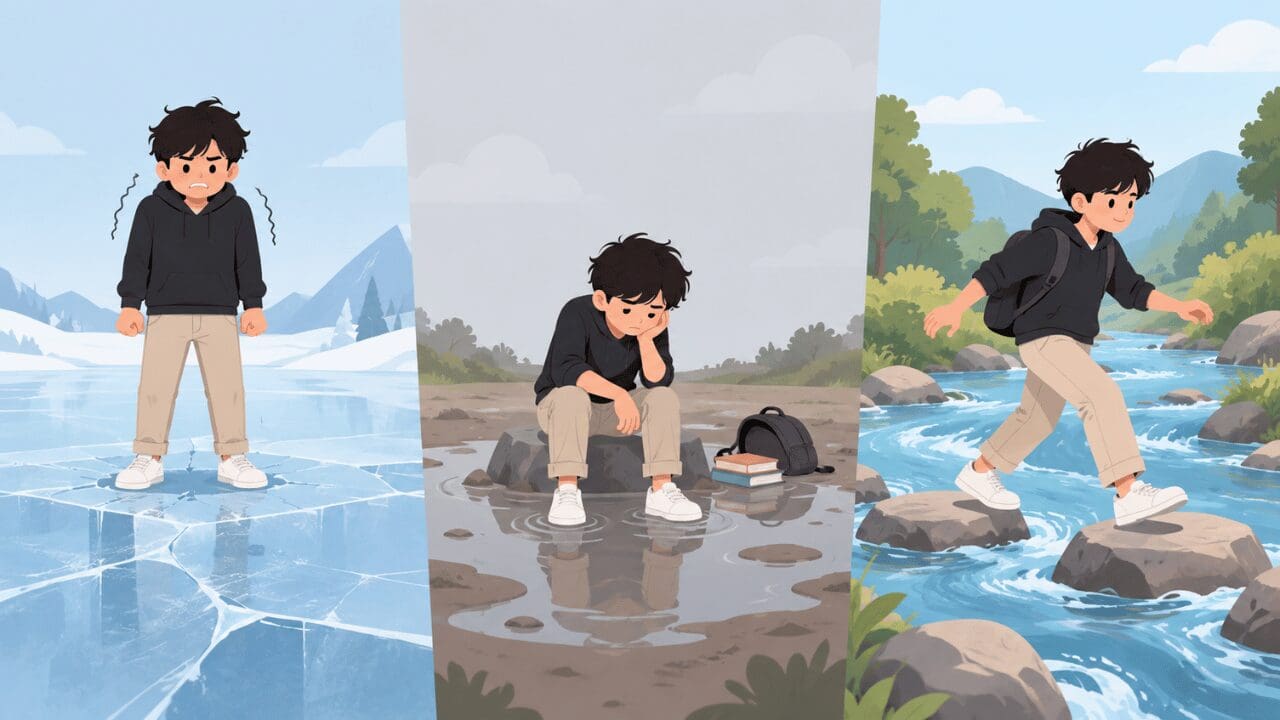
Life Ki-do uses a useful metaphor to describe the different states a learner can find themselves in during practice. The question it frames is: are you moving like ice, like a puddle, or like a river?
Ice: Rigid and Stuck
The ice state occurs when frustration, self-criticism, perfectionism, or the pressure to perform has produced rigidity. In this state, the learner becomes tense, defensive, and unable to adapt. Every error confirms the fear that they are not good enough. The body locks, the breath tightens, and the brain contracts around the problem rather than engaging with it openly. Practice in the ice state tends to produce more of the same errors, because the very rigidity that characterizes the state prevents the adjustment that would allow something different to happen.
Most learners will recognize this state from their own experience. It often follows a period of effort in which the expected improvement has not materialized, or a moment in which an error occurs at a particularly visible or high-stakes time. The frustration is understandable, but the rigidity that accompanies it is not useful for learning.
Puddle: Sluggish and Disengaged
The puddle state is in some ways the opposite of ice but equally unproductive. In this state, the learner has become passive, disengaged, or going through the motions without genuine presence or investment. This can happen when practice feels pointless, when progress is not visible, or when a skill has become so familiar at the current level that it no longer presents genuine challenge.
A learner in the puddle state is not failing dramatically. They are simply not developing, because genuine development requires a quality of engaged attention and appropriate challenge that the puddle state does not provide. The practice is happening, but the learning is not.
River: Open, Adaptive, and Engaged
River Flow is the state that supports best learning. It is not a state of ease or absence of challenge. It is a state of engaged openness: present to what is happening, responsive rather than reactive, able to receive feedback and adjust without becoming defensive or collapsing into passive disengagement.
In River Flow, the learner can encounter difficulty and remain curious about it rather than judging it. They can make an error and treat it as information about what to do differently rather than as evidence of inadequacy. They can receive feedback and integrate it rather than resisting or dismissing it. The Three B’s, when functioning well, support and maintain this state.
River Flow is not a fixed destination. Over time, a learner moves in and out of it throughout any practice session. The goal is not to achieve permanent river flow but to notice when you have moved into ice or puddle, and to use the Three B’s as tools to return toward the more engaged and open state where learning actually happens.
The A-B Formula: Awareness, Acceptance, and Baby Steps
Life Ki-do offers a practical formula specifically designed for the emotional experience of learning something new and the goal-setting that shapes how you approach it. Called the A-B Formula, it provides a grounded, non-judgmental approach to both the current moment of difficulty and the path forward.
A: Awareness and Acceptance
The A in the A-B Formula stands for Awareness and Acceptance. The first part of the formula is to notice clearly where you actually are: what your current skill level is, what is and is not working yet, and what is happening in the body, breathing, and brain as you practice. Not where you expected to be, or where you think you should be, but where you genuinely are.
Awareness without acceptance tends to produce self-criticism: I notice that I cannot do this yet, and that is unacceptable. The acceptance part of the formula is not about pretending that the current situation is ideal. It is about releasing the judgment that makes the current situation harder to work through than it needs to be. When you accept where you are as the actual starting point rather than as a failure, you create the conditions in which the next step becomes visible and possible.
For many learners, acceptance is the most difficult part of the formula. There is often a story attached to being a beginner: that it reflects poorly on you, that others are watching, that you should be further along by now. These stories add a layer of difficulty to the learning process that has nothing to do with the skill itself. Accepting where you are dissolves that layer, leaving only the actual work of learning.

B: Baby Steps
The B stands for Baby Steps, and it addresses the path forward from a place of honest acceptance. Rather than fixating on the full, distant goal of competence, baby steps focus on the smallest next piece of progress that is genuinely achievable from your current position.
Baby steps are not small because the ambition is small. They are small because small steps are the actual mechanism through which large skills develop. Each baby step is a real step, producing real learning and real progress. The accumulation of many small, genuine steps covers the same ground as the large leaps that look like rapid competence from the outside.
The baby steps approach also addresses one of the most common sources of unnecessary difficulty in the learning process: the fixation on the end goal. When every practice session is implicitly evaluated against the complete version of the skill, every session that falls short of that standard feels like a failure. When each session is evaluated instead against whether meaningful progress on the next small piece has occurred, a very different experience of the learning process becomes possible.
🗲 THE A-B FORMULA
A: Awareness and Acceptance of where you genuinely are right now.
B: Baby Steps toward the next achievable piece of progress. Together, these keep learning grounded, honest, and moving forward.
Why Frustration and Failure Are Part of Skill Development
Frustration during skill development is not a sign that something has gone wrong. It is a reliable indicator that you are at the edge of your current competence, which is exactly where learning happens. The challenge is not to eliminate frustration but to develop a productive relationship with it rather than allowing it to collapse into the ice state or drive you out of practice entirely.
Mistakes as Information
One of the most practically useful shifts available to learners is treating mistakes as information rather than as verdicts. A mistake in the middle of skill development tells you something specific: this particular approach, at this particular moment, did not produce the intended result. That is useful data pointing toward what might need to be different.
However, when a mistake carries the weight of a verdict, it tells a very different story: you are inadequate, you are not progressing, something is fundamentally wrong with your ability. This interpretation produces the kind of emotional activation that moves a learner toward the ice state rather than toward the open curiosity that makes the information in the mistake actually useful.
Treating mistakes as information rather than verdicts requires deliberate cultivation. It runs against the grain of the self-critical response that many learners have developed as a default. Over time, though, it makes a significant difference to both the quality of practice and the sustainability of the learning process.

Comparison and Perfectionism
Two of the most reliably counterproductive tendencies in learning are comparison and perfectionism. Both create a standard against which current performance is measured and found inadequate: comparison measures against someone else’s position, and perfectionism measures against an idealized version of perfect performance.
Neither comparison nor perfectionism is entirely avoidable, and attempting to suppress them entirely tends to produce its own kind of rigidity. The more productive approach is to notice when they are operating, acknowledge them without either reinforcing or fighting them, and return attention to the actual practice at hand. The A-B Formula is specifically useful here: returning to awareness of where you actually are, rather than where comparison or perfectionism says you should be, brings you back to a workable starting point.
Tunnel Vision and When to Step Back
One of the specific patterns the Life Ki-do frameworks address is tunnel vision: the tendency, when working hard to get something right, to become so focused on the error or the goal that broader awareness is lost. The harder the learner tries, the more contracted their attention becomes, and the more they inadvertently interfere with the very capability they are trying to access.
When tunnel vision appears, the most productive response is often to step back from the current attempt rather than intensifying the effort. This might mean a brief physical break, returning to a simpler version of the skill, or simply pausing to check in with the Three B’s before attempting again. Stepping back is not retreat. It is a deliberate return to the state that makes progress possible.
What You Become While Learning Matters as Much as the Skill Itself
The development of a specific skill, while genuinely valuable, is only part of what happens when someone commits to learning something difficult. Through the process of learning, navigating frustration, making mistakes and continuing, and developing the capacity to be a beginner without being overwhelmed by it, qualities build in the learner that are not skill-specific and that transfer into every other area of their life.
Resilience is perhaps the most significant of these. The learner who has moved through the genuinely difficult early stages of a skill without giving up has demonstrated to themselves that the difficult early stages can be moved through. That lived experience carries a different kind of weight than abstract encouragement. It is direct, personal evidence of a capacity the learner now knows they have.

Developing a Healthy Relationship With Yourself as a Learner
One of the less visible but more important outcomes of a productive learning process is the development of a healthier relationship with yourself as a learner. This involves developing the capacity to be at the beginning of something without treating that beginning as evidence of inadequacy. It involves working through difficulty without collapsing into self-criticism or avoidance. It involves learning to be curious about your own process rather than judgmental about your own performance.
This kind of self-relationship tends to generalize. Someone who has developed it in one learning context finds it more available in other contexts. The patience, the willingness to be a beginner, the capacity to treat mistakes as information rather than verdicts: these do not stay neatly inside the domain where they were developed. They become part of how the person approaches new challenges generally.
Grit, Patience, and Adaptability
Grit, the capacity to persist toward a meaningful goal despite difficulty and setback, develops through the actual experience of difficulty and setback rather than through knowing about them abstractly. A learner who has continued practicing something difficult through periods of frustration and apparent stagnation has developed grit in a form that is genuinely available to them, not just as a concept they understand.
Patience and adaptability develop in the same way. Patience is not simply waiting. It is the capacity to continue engaging with a process without demanding that it produce results at the rate you expected. Adaptability is the capacity to notice that what you are doing is not producing the result you want, and to try something different rather than simply doing the same thing harder. Both of these are skills with much broader application than any particular domain of learning.
How Martial Arts Teaches You to Learn
Martial arts training provides an unusually rich environment for experiencing the principles described in this article and for developing the practical skills of learning under pressure. This is not because martial arts is uniquely challenging in terms of physical difficulty, but because of what the structure of martial arts training consistently requires learners to do.
Repeated Encounters With the Beginner Stage
In a well-run martial arts program, students regularly encounter techniques and situations they cannot yet manage. This is by design. The curriculum introduces new material before the previous material has been mastered, which means that every level of student is regularly in the position of being a beginner relative to something. The ice state, the puddle state, and the discomfort of not yet being competent at something are familiar and recurring experiences, not exceptional ones.
This regularity has an important effect over time. Students develop a working familiarity with the early stages of learning rather than treating each new beginning as a crisis. They have moved through enough beginnings to know that the current one is also temporary. The experience of being bad at something new becomes less threatening because it has become so familiar as a stage that consistently leads somewhere.
Partner Training and Real-Time Adaptation
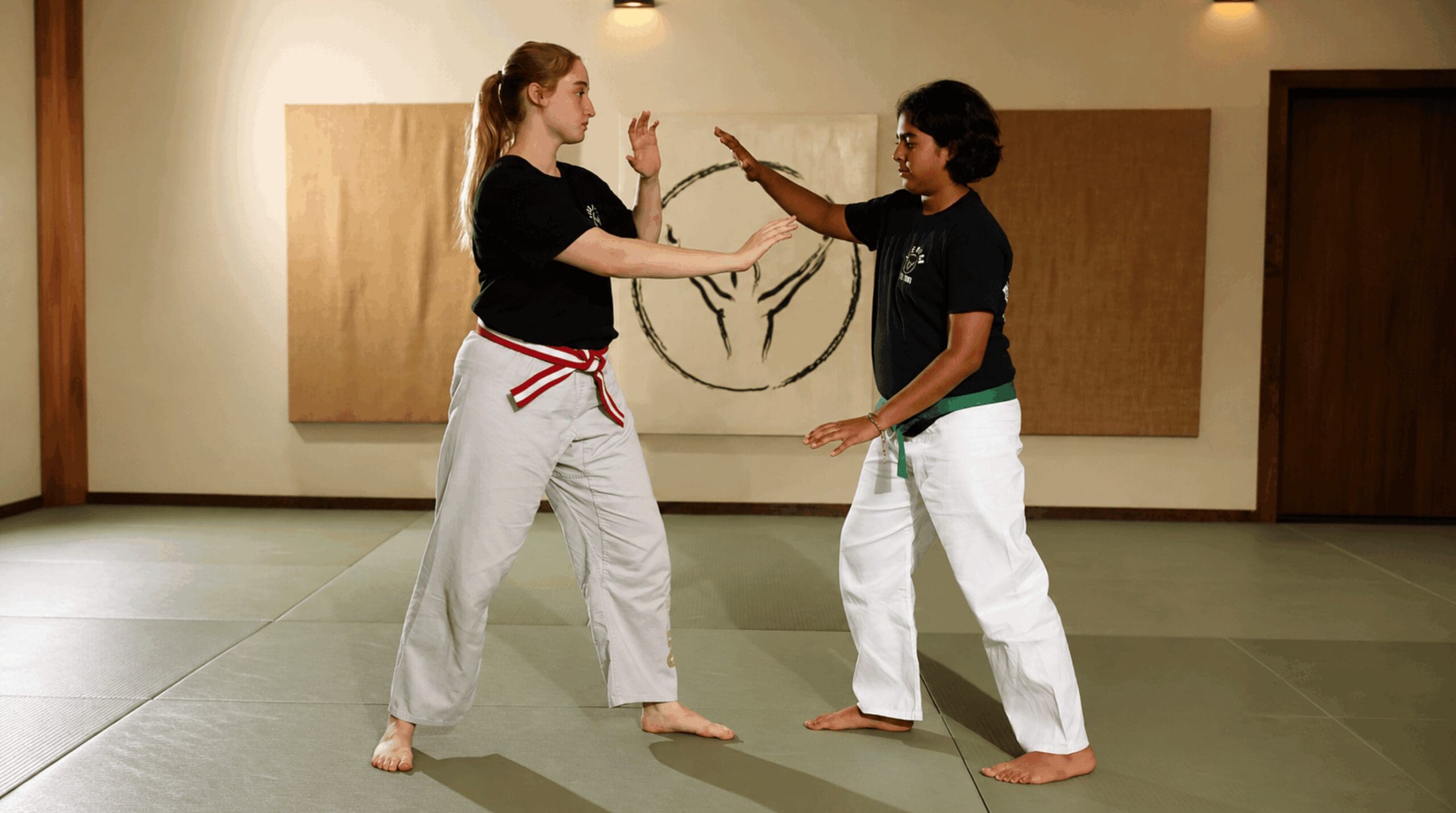
Partner-based training in martial arts creates a specific kind of learning environment that is difficult to replicate in other contexts. Working with a partner means that the learning challenge is dynamic and responsive rather than fixed. You cannot simply practice the ideal technique against a stationary target. You must read what your partner is doing, adapt to what is actually happening, and maintain the Three B’s in a situation that is not entirely under your control.
This real-time adaptation requirement is one of the most valuable aspects of partner training from a learning-skills perspective. It builds the capacity to work with what is actually happening rather than what was planned, which transfers to learning contexts well beyond the training environment. The communication dimension of partner training practices exactly the kind of collaborative problem-solving that the A-B Formula and the Three B’s are designed to support.
Breaking Technique Into Manageable Pieces
Quality martial arts instruction almost always involves breaking complex techniques into their component pieces and developing each piece before integrating it into the whole. This is not a pedagogical nicety. It is a practical necessity, because the whole technique cannot be practiced well before the components are developed.
Students who experience this process repeatedly develop an intuitive understanding of how complex skills are built from simpler components. When faced with a new skill outside the martial arts context, they are more likely to look for the component pieces and the path through them rather than attempt the whole skill immediately and feel overwhelmed by their inability to perform it. That is a transferable learning skill, not just a martial arts skill.
Martial arts is not only a way to develop physical skills; it can also become a practical environment for developing the way you approach learning itself. If you want to explore how Life Ki-do connects martial arts training with broader personal growth, confidence, awareness, and real-life skills, take a closer look at the Life Ki-do approach.
How to Apply This Approach to Learning Anything
The frameworks described in this article are not specific to martial arts or to any particular domain. They are practical approaches to the general experience of learning something new, and they can be applied to any skill in any context: a musical instrument, a language, a professional skill, a creative practice, a fitness goal, or a personal development aim.
A Practical Process for Any New Skill
- Choose the skill and find a clear path.Before you begin, look for the steps involved. Is there a teacher, a structured curriculum, or a community of practice you can draw on? Having a map does not guarantee the journey will be easy, but it reduces the additional difficulty of navigating without one.
- Start with honest awareness.Use the A part of the A-B Formula. Notice clearly where you actually are: your current ability, your current state in the Three B’s, and any stories you are already telling yourself about what being a beginner means. Awareness is the actual starting point.
- Identify the next small step.Rather than orienting practice toward the full, distant goal, identify the smallest next piece of progress that is genuinely achievable. This is the baby step. Practice it until it has genuinely developed before moving to the next one.
- Monitor the Three B’s during practice.Notice when the body tenses, the breath shortens, or the brain contracts into criticism or tunnel vision. Use the Three B’s not just as a monitor but as a toolkit: adjust the physical state, return to rhythmic breathing, soften the quality of attention from critical to curious.
- When stuck, step back before pushing harder.If frustration is producing rigidity, stepping back to a simpler version of the skill or taking a brief break to reset the Three B’s is often more productive than intensifying the effort. River Flow supports learning. The ice state rarely does.
- Adapt as you go.Learning is not a fixed plan executed perfectly. It is a dynamic process that requires regular adjustment. Notice what is working and what is not. Adjust the challenge, the approach, or the pace in response to what is actually happening rather than what you planned.
You Don’t Have to Be Good Yet
Understanding why we are bad at things before we get good at them changes the relationship we have with being a beginner. The struggling is not evidence that you should quit. It is not evidence that you lack ability. It is evidence that you are at the stage where competence develops, which means you are exactly where you need to be.
The pressure to be good immediately, to hack the early stages, to skip the beginner experience altogether, creates exactly the kind of physical, mental, and emotional tension that makes learning harder than it needs to be. Releasing that pressure does not mean lowering your standards. It means developing a more accurate picture of what the learning process actually involves, and bringing a more productive relationship to each stage of it.

The Three B’s, River Flow, and the A-B Formula are practical frameworks for doing exactly this: monitoring your state, accepting where you genuinely are, taking the next realistic step, and adapting as you go. None of these are about making learning easy. They are about making the difficulty productive rather than unnecessarily compounded.
And alongside the skill itself, something else develops through this process: a relationship with yourself as a learner that is calmer, more honest, and more capable of working with difficulty without being derailed by it. That quality, developed through the repeated experience of being a beginner and continuing anyway, turns out to be one of the most valuable things that learning produces.
🗲 JOIN US TODAY!
For families in Austin, Life Ki-do offers a free introductory class for new students of every age and experience level. No prior experience is required, and no commitment is expected. Come and experience the difference that a genuinely nurturing and empowering training environment makes.
Frequently Asked Questions
Why are you bad at things before you get good at them?
Being bad at a new skill is normal and expected because competence has not yet been built. Skill development requires practice, repetition, feedback, and time before the patterns that allow proficient performance develop. This is true regardless of the learner’s natural aptitude. The early stage of learning is not a sign of inadequacy. It is the stage through which all skill development passes.
How long does it take to get good at something new?
This varies considerably depending on the complexity of the skill, the quality of instruction and practice, the time devoted to practice, and individual factors in the learner. What is consistent across most skills is that the path runs through an early stage of not being good, and that trying to rush or skip this stage tends to interfere with learning rather than accelerate it. A clearer path, consistent practice, and productive use of difficulty tend to be better predictors of progress than raw effort or aptitude alone.
What is the A-B Formula?
The A-B Formula is a Life Ki-do framework for approaching the learning process and the emotional experience of being a beginner. A stands for Awareness and Acceptance: noticing clearly where you actually are in your skill development, and accepting that starting point without judgment. B stands for Baby Steps: identifying the smallest next achievable piece of progress rather than fixating on the distant end goal. Together, the formula keeps learning grounded in reality and moving forward in a manageable way.
What is River Flow?
River Flow is the learning state Life Ki-do describes as most supportive of skill development: open, adaptive, present, and engaged. It sits between the ice state, in which frustration and self-criticism produce rigidity and inability to adapt, and the puddle state, in which disengagement and passivity prevent genuine learning. River Flow is maintained by attending to the Three B’s, Body, Breathing, and Brain, and using them to regulate the physical, breathing, and cognitive state during practice.
How do you deal with frustration when learning a new skill?
Frustration during skill development is a reliable indicator that you are at the edge of your current competence, which is where learning happens. The goal is not to eliminate frustration but to prevent it from producing the ice state, in which rigidity makes further progress difficult. Useful responses include checking in with the Three B’s, returning to rhythmic breathing, stepping back to a simpler version of the skill, breaking the current challenge into a smaller piece, or adjusting the practice to find a level of challenge that is productive rather than overwhelming.
Why does comparison make learning harder?
Comparison measures your current position against someone else’s different position, which is almost never a meaningful comparison. Most visible examples of competence represent someone’s performance after significant practice, not their beginning. Comparing your beginning to someone else’s middle or end creates a false standard that makes the normal experience of being a beginner feel like failure. Progress measured against your own previous position is meaningful. Progress measured against someone else’s different trajectory is usually discouraging without being informative.
Can martial arts help you get better at learning?
Martial arts training provides a practical environment for developing the learning skills described in this article. Students regularly encounter techniques they cannot yet perform, which means they regularly experience the early stages of skill development. Over time, they develop a working familiarity with being a beginner that makes each new beginning less threatening. Partner training builds the capacity to adapt in real time. The Three B’s and A-B Formula are applied consistently, developing the capacity to monitor and regulate the physical, breathing, and mental state during practice.

About Jonathan Hewitt
Jonathan Hewitt is the founder of Life Ki-do Martial Arts & Personal Development and an award-winning author of multiple books on parenting, confidence, and emotional development. For over 30 years, he has helped children, teens, and families build calm strength, confidence, and real-life skills from the inside out. Jonathan is also the host of the Spiritual Ninja Podcast on all platforms.

Why Do I Keep Checking My Phone? What Your Body Has to Do With It
Why do you keep reaching for your phone, even when you do not need it? Explore what you may really be looking for, why fighting the urge rarely works, and how breathing, movement, time outside, and real connection can help you build a healthier relationship with your phone.
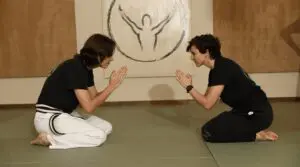
Is Martial Arts Safe? What Parents and Adults Should Look for in a School
Is martial arts safe? The honest answer depends on how people teach and train. Learn how awareness, progression, training partners, and school culture shape martial arts safety, plus a practical checklist for visiting a school for yourself or your child.
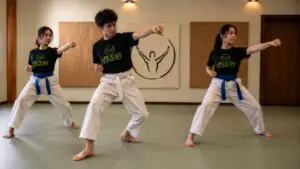
Why You’re Bad at Things Before You Get Good at Them: How to Learn Without Giving Up
Being bad at something new is not evidence that you should quit. It is evidence that you are at the stage where competence gets built — which means you are exactly where you need to be. This comprehensive guide explores why the pressure to be good immediately actually interferes with learning, what really happens during skill development, and three practical Life Ki-do frameworks — the Three B’s, River Flow, and the A-B Formula — for moving through the beginner stage with more openness, less frustration, and a healthier relationship with the learning process itself.

Healthy Relationships Start With You: How to Build Better Connections
Most people approach relationship problems by asking what the other person needs to do differently. This article takes a different starting point. Understanding how you show up — your fears, assumptions, reactivity, and needs — is the foundation from which genuine connection becomes possible. This guide explores what makes relationships healthy, why your inner world shapes your outer connections, the Life Ki-do My Shoes, Your Shoes, Our Shoes framework, empathy without losing yourself, and how martial arts develops real relationship skills through consistent partner practice.

Ground Fighting in Brazilian Jiu Jitsu: Why It Is Essential
Many physical confrontations can move to the ground, which is one reason ground fighting in Brazilian Jiu Jitsu is such an important skill for martial
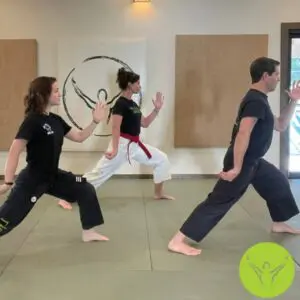
Understanding Tai Chi Breathing Techniques for Relaxation and Focus
“The breath is the bridge which connects life to consciousness.” Thich Nhat Hanh wrote those words, and they speak directly to what Tai Chi has


